

Uncategorized
How to Choose the Right Wall Art and Frames for Your UK Hom
Nov
When you first move into a new place, the walls are usually the last thing you think about. You focus on furniture, appliances and storage, and then suddenly realise your home still looks a bit empty. That’s where wall art and well‑chosen picture frames can completely transform a room.
In this guide, we’ll walk through how to choose the right prints and frames for a UK home, whether you’re styling a rented flat or a family house. We’ll also touch on how ready‑to‑hang frames and art sets from stores like Stalfy Trading can make the whole process much easier.
1. Start with the room’s purpose and mood
Before you buy anything, decide how you want the room to feel.
- Living room: Relaxed, inviting, a bit stylish. Nature scenes, abstract art and calming colours tend to work well.
- Bedroom: Soft and peaceful. Think minimalist line drawings, gentle landscapes or artwork in muted tones.
- Home office: Motivating and focused. Graphic prints, typography and strong, clean images are ideal.
- Hallway: This space sets the tone the moment you walk in. Statement prints like bold eagles or geometric designs can create a strong first impression.
Ask yourself: Do I want this room to feel calm, cosy, energetic or luxurious? Pick artwork that matches that mood.
2. Get the sizing right – especially with A‑sizes
One of the most common mistakes people make is buying artwork that’s too small for the wall. In the UK, standard paper sizes make it easier:
- A4 (21 x 29.7 cm) – best for small spaces, desks and gallery‑wall clusters.
- A3 (29.7 x 42 cm) – great for grouping in pairs or sets of three.
- A2 (42 x 59.4 cm) – a strong statement size for feature walls, over sofas or consoles.
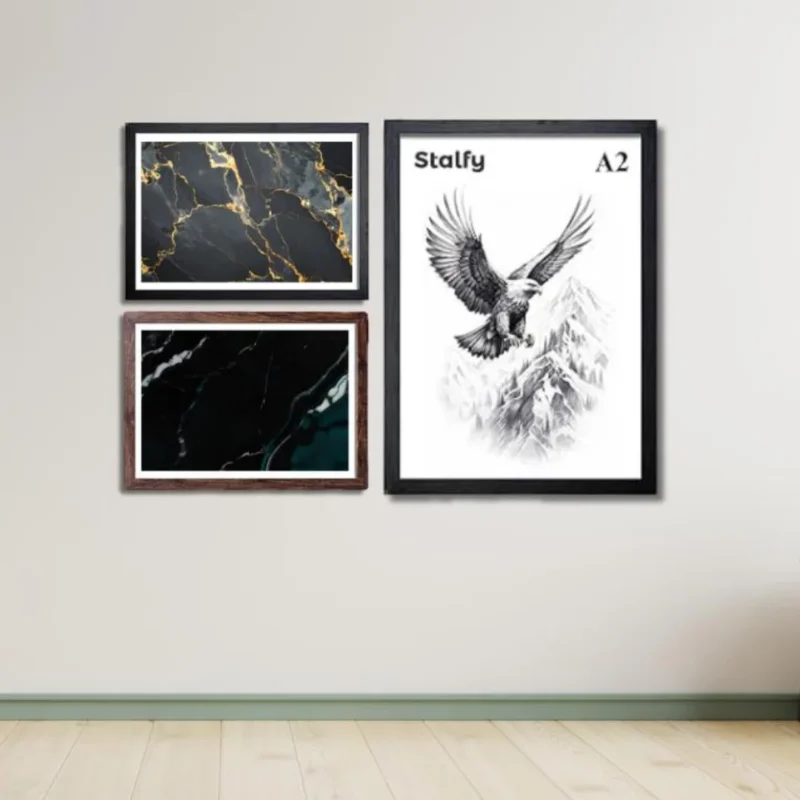
As a rough rule, your main piece above a sofa or bed should be around 60–75% of the width of the furniture. That’s why A2 frames, like the eagle designs sold by Stalfy Trading, work so well: they’re big enough to anchor a wall without overpowering everything.
3. Choose frames to match your style (not just the print)
The frame is almost as important as the artwork itself. It’s like choosing the right pair of shoes for an outfit.
- Black frames – modern, minimal, work well with monochrome prints or bold colours.
- Wood‑effect frames – warmer, more homely and versatile. They pair beautifully with nature prints, wildlife art and neutral interiors.
- Light grey or oak tones – perfect for Scandinavian or coastal styles.
If your home is mostly neutral (white, beige, grey walls), you can safely mix black and wood‑tone frames. A set of A2 wood‑effect eagle frames mixed with smaller black frames or colourful prints can create a cohesive, layered look.
4. Think in sets, not just single pieces
A single large print can look great, but sets make it easier to style a whole wall.
Consider:
- Symmetrical pair: Two frames side by side at the same height, ideal above a bed or console table.
- Gallery wall: A mix of A2, A3 and A4 frames arranged in a rough rectangle. Use matching frames for a tidy look, or mix finishes for something more eclectic.
- Ready‑made sets: Some retailers sell packs of matching frames (for example, packs of three A2 eagle frames). These are perfect if you want instant impact with minimal thinking.
Lay your frames out on the floor first before you hang them. This lets you experiment with spacing and order without drilling extra holes.
5. Match (or intentionally contrast) with your colour scheme
Colour can either tie the room together or fight with everything else.
- If your room is neutral, you can go bold with your artwork – vibrant abstracts, colourful landscapes or strong black‑and‑white wildlife.
- If your room already has strong colours in the sofa or rug, pick art with one or two of those colours in it to make everything feel intentional.
- If you love a black‑and‑white eagle print but your room is colourful, use cushions or throws that echo the brown or black frame so it doesn’t feel random.
Don’t overthink it: as long as there is one repeating colour between your art, cushions, rug or accessories, it will usually look considered.
6. Consider plexiglass for safety and practicality
Traditional glass can look beautiful, but it’s heavy and fragile. For busy households, rented flats or rooms where children play, plexiglass (acrylic) fronts are often a better choice.
Frames like the Stalfy A2 eagle series use plexiglass for several reasons:
- Shatter‑resistant: Much safer if a frame is accidentally knocked off the wall.
- Lighter: Easier to hang, especially in rented properties with lighter fixings.
- Clear: Modern acrylic is very transparent, so your artwork still looks crisp.
You can wipe plexiglass clean with a soft cloth, making it practical for everyday life.
7. Hang at the right height
A beautifully framed print can still look wrong if it’s hung too high. In galleries, art is usually hung so the centre of the piece is at around 145–150 cm from the floor – roughly average eye level.
For large A2 pieces:
- Above a sofa or bed: leave about 15–25 cm gap from the top of the furniture to the bottom of the frame.
- In a hallway: keep centres of all frames at roughly the same height to avoid a “bumpy” look.
Use a tape measure and a spirit level – it’s worth the extra few minutes.
8. Don’t be afraid to mix art types
A home feels more personal when different styles of artwork live together. You might combine:
- A monochrome eagle print
- A colourful abstract canvas
- A small typography quote
- A photo from your own travels
Picture frames are reusable. You can buy a few good‑quality A2 or A3 frames now and swap the prints out as your taste or seasons change. That’s one of the reasons UK shoppers increasingly choose separate frames and prints rather than just cheap canvas prints.
9. Where to start if you’re overwhelmed
If you’re not sure where to begin, choose one hero piece you love – perhaps an A2 eagle print or a colourful abstract that really grabs you. Hang that first, then gradually build around it with smaller frames.
Look for retailers who sell:
- Ready‑to‑hang framed art
- Packs of matching frames
- Standard A‑size frames you can reuse
This keeps everything simple and ensures replacements or additions are easy to find later.
