

Uncategorized
Dog Paw Protection 101 – Why Your Dog Needs Boots in UK Weather
Nov
If you’ve ever watched your dog hesitate on a freezing pavement or hop awkwardly on a hot day, you’ve already seen how important paw protection can be. We’re used to thinking of dogs as tough and resilient, but their paws are more sensitive than many owners realise.
In the UK, with its mix of cold winters, wet streets and occasional heatwaves, dog boots are quickly becoming an essential rather than a novelty. Let’s break down why.
1. The reality of UK pavements
British weather is famously unpredictable. In the space of a week, you can move from frost to rain to strong sunshine. Every one of these conditions can affect your dog’s paws:
- Cold and frost: Grit and de‑icing salt can dry out and irritate paw pads, sometimes causing cracking.
- Rain: Wet surfaces soften paws and make them more vulnerable to abrasion and small cuts.
- Summer heat: Dark tarmac and paving slabs can heat up far more than the air temperature, enough to burn sensitive paw pads.
A simple rule of thumb: if you wouldn’t comfortably stand barefoot on the surface for several minutes, it’s likely uncomfortable for your dog too.
2. What dog boots actually do
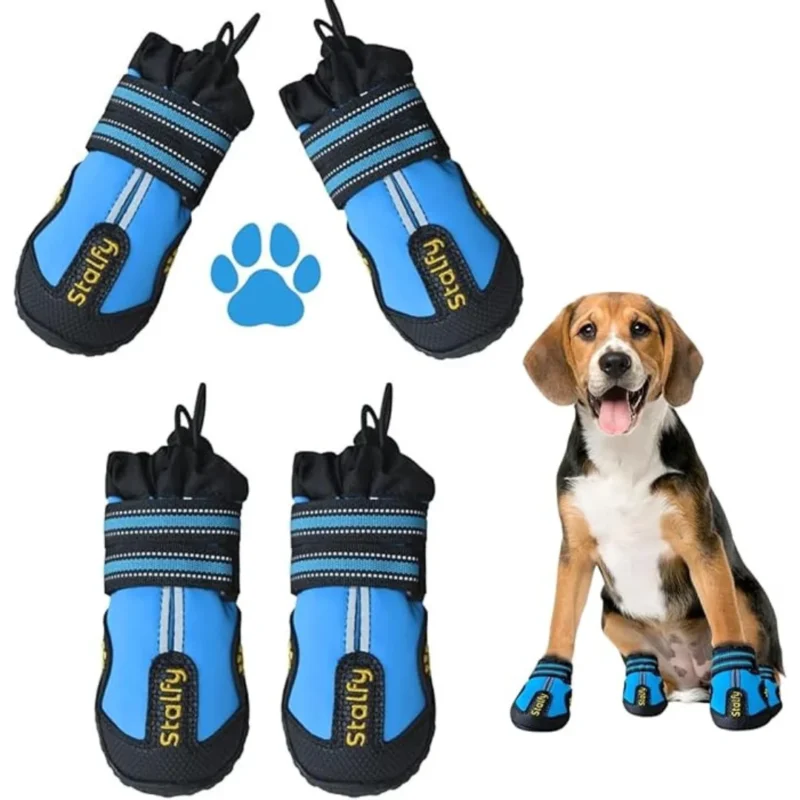
Well‑designed dog boots, like the non‑slip sets sold by Stalfy Trading, are more than just cute accessories. They offer three main benefits:
- Protection: A tough but flexible sole acts as a barrier between your dog’s paws and hazards such as sharp stones, broken glass, grit or hot pavement.
- Grip: Textured, non‑slip soles help your dog stay steady on smooth floors, wet pavements or icy paths. This is particularly important for older dogs or those with joint problems.
- Cleanliness: Boots keep mud, road dirt and chemicals off your dog’s paws – which in turn keeps your carpets and car cleaner.
For dogs recovering from paw injuries, boots can also help protect bandages and reduce the temptation to lick or chew.
3. When are boots particularly useful?
Not every dog needs boots on every walk, but there are situations where they make a big difference:
- Winter walks on gritted roads – when rock salt and grit are everywhere.
- Summer afternoons – especially in urban areas with lots of tarmac.
- Rough terrain – hikes with loose stones, sharp gravel or thorny undergrowth.
- City streets – broken glass or rubbish in certain areas can be a real hazard.
- Indoor use – dogs who slip on laminate, tile or wooden floors can benefit from the added traction.
Many owners keep boots in their dog‑walking kit and put them on only when conditions really justify it.
4. Getting the right fit
A bad experience with poor‑fitting boots can put a dog off for life, so taking time to measure properly is crucial.
Most brands provide a sizing chart based on:
- Paw length – from the back of the paw pad to the tip of the longest toe.
- Paw width – across the widest part of the pad.
To measure:
- Ask your dog to stand on a piece of paper.
- Gently press down so the paw spreads naturally.
- Mark the farthest points of length and width.
- Measure those marks with a ruler and compare with the chart.
Boots should be snug but not tight. If you’re between two sizes, many owners prefer going slightly bigger and tightening the straps well.
5. Helping your dog get used to boots
The first time a dog wears boots, they often march around like they’re walking on the moon. That’s completely normal.
Here’s how to make the transition easier:
- Start indoors for a few minutes at a time with treats and praise.
- Distract your dog with a short play session so they forget about their paws.
- Gradually increase the time they wear the boots before heading outdoors.
- Check for any rubbing or red marks after the first few walks and adjust the fit.
Most dogs adapt quickly once they realise they can walk and run normally – and that their paws feel more comfortable on difficult surfaces.
6. Design features to look for
Not all dog boots are created equal. Look out for details like:
- Non‑slip rubber soles – for grip and durability.
- Velcro or hook‑and‑loop straps – easy to adjust and secure.
- Drawstring tops – help keep boots in place and stop debris entering.
- Reflective details – make your dog more visible on dark evening walks.
- Soft, breathable fabric – to avoid overheating and rubbing.
Stalfy’s blue dog boots, for example, combine non‑slip soles with reflective straps and adjustable fastenings, which makes them suitable for everyday UK weather instead of just occasional use.
7. Looking after dog boots
A bit of basic care will keep boots useful for many seasons:
- Rinse off mud or grit after walks and let them air‑dry.
- Check straps and seams regularly for wear.
- Store them in a dry place, ideally with your lead and harness so you don’t forget them.
If your dog is very active or walks on particularly abrasive surfaces, consider keeping a spare set for emergencies.
Dog boots may have started as a niche item, but UK owners are increasingly realising how practical they are. From preventing burned pads on summer tarmac to stopping grit from cracking paws in winter, they’re a small investment that can save a lot of discomfort – and a few vet bills – in the long run.
